
How Cannes Turned its Back on Fashion History
The Cannes red carpet and 1790s Paris have a lot more in common than you might think...

It was on the basis of ‘decency’ that the Cannes Film Festival announced its decision to ban nude dresses from its 2025 red carpet, putting an end to a long legacy of risque dressing on the marches du palais.
A hotspot for the more artistically minded celebs and socialites, the festival has a long tradition of non-conformity. Dresses are frequently fringe, pushing at boundaries that even the Met Gala doesn’t quite liberate. It typically means some sort of nudity (see Ilona Staller’s 1988 dress or Bella Hadid’s 2024 sheer Saint Laurent look), but also more down-to-earth scenes of rebellion. With heels mandatory for women attendees, many celebrities have made a show of ascending the palais steps barefoot, with Kristen Stewart kicking off her Louboutins in 2018.
Nudity and rebellion. It’s a fantastically French affair.
When the news of the ban dropped earlier this week I was in the thick of a re-read of one of my favourite fashion history books – Amelia Rauser’s The Age of Undress. Besides being a visually stunning book, it also dives deep into the creation of neoclassical dress in late 18th century France, breaking down the ethos of the style into topics like drapery, transparency, lightness, and whiteness. She deftly navigates the origins of the age of undress, and what it meant to the women who participated in it.
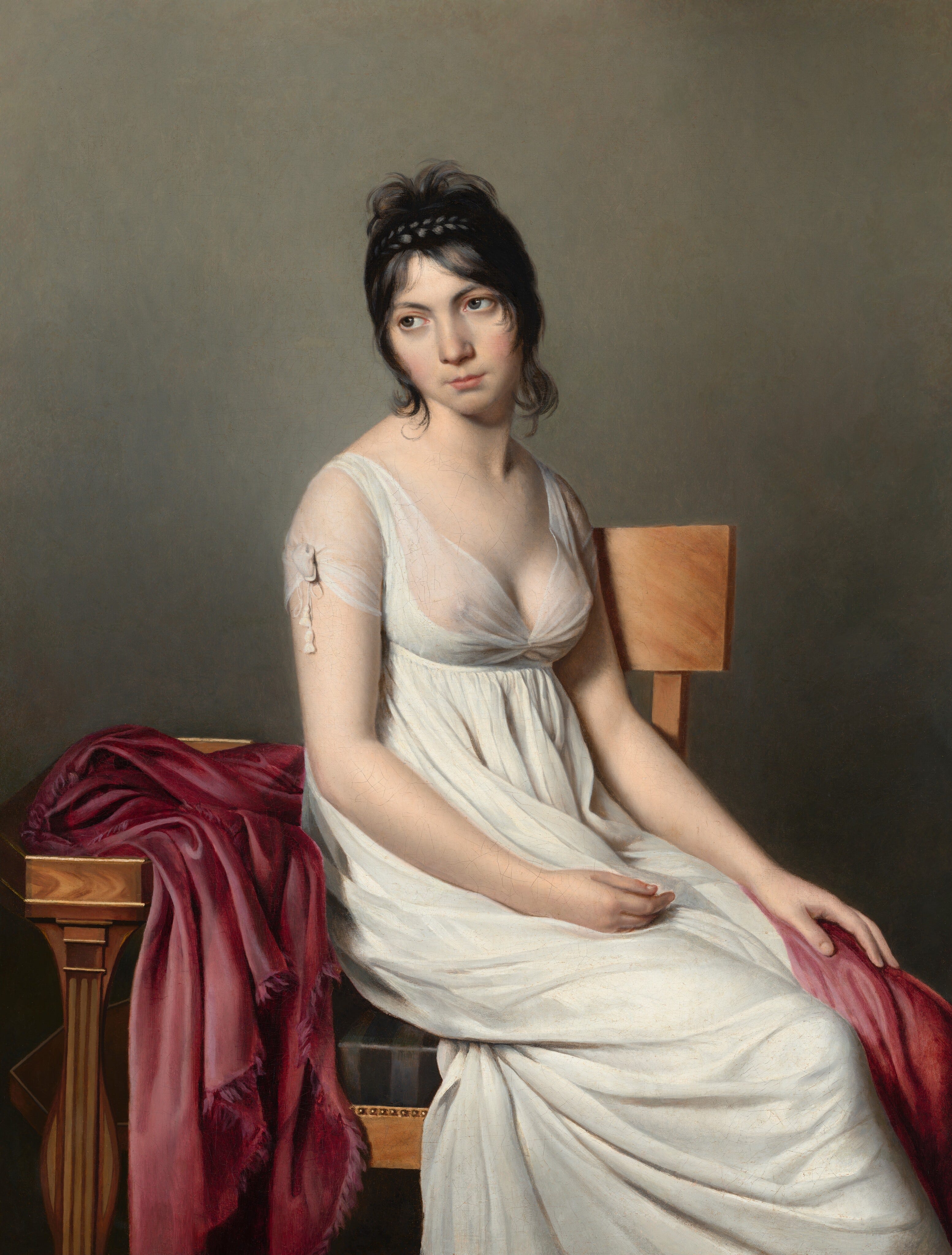
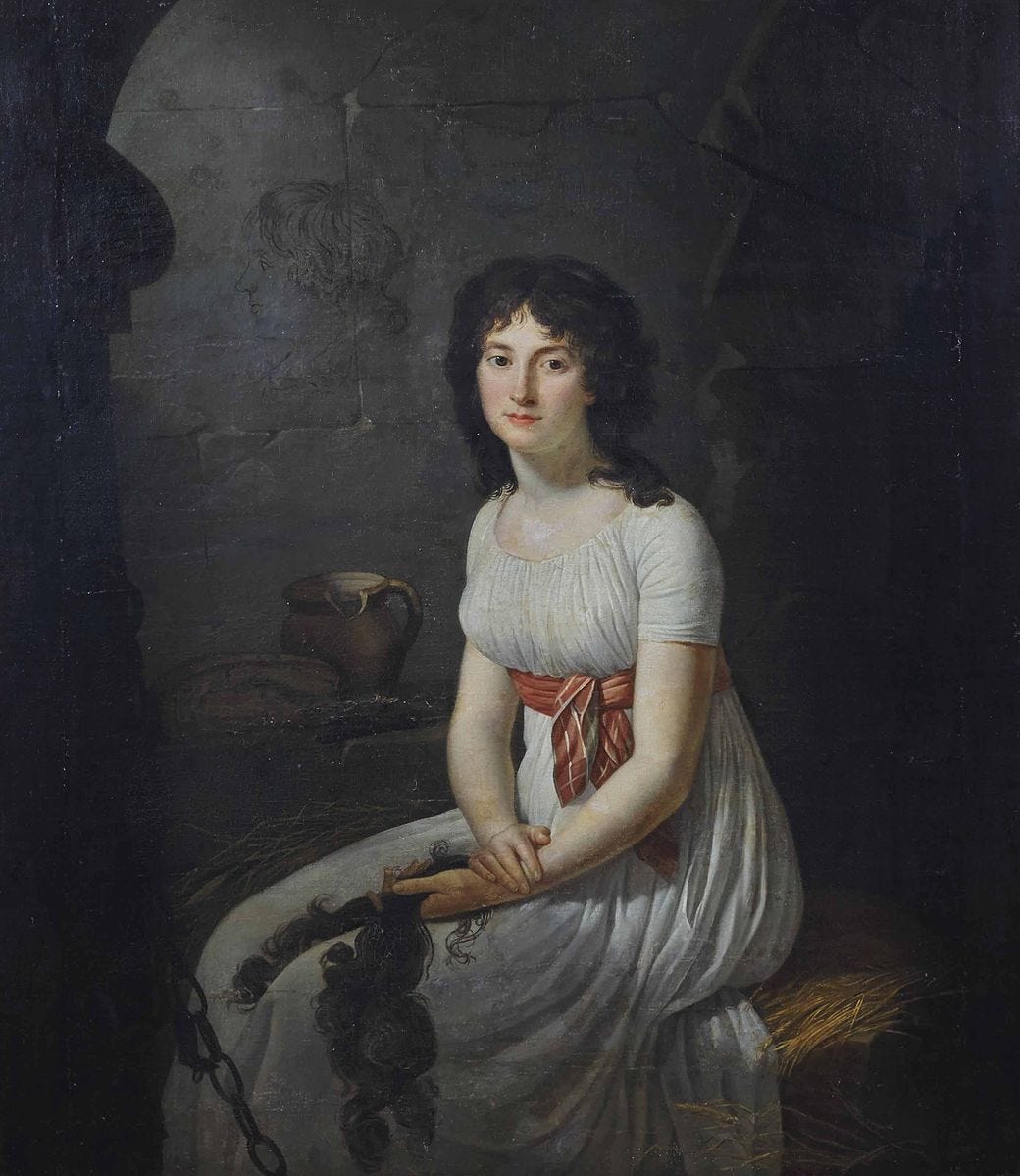
Nudity was an essential element of French neoclassical dress (and British, too). Made from fabrics like Indian muslin or netting, these simple gowns clung to the body and revealed as much or as little as the wearer liked, using petticoats and shawls to monitor the levels of nudity. That obsession with clinging drapery, dresses that are more like skin than fabric, appears in both fine art and cheap prints from the age. This has prompted the modern assumption that the women of the French Empire were wetting their dresses to aid the illusion, but no contemporary references reinforce this myth.
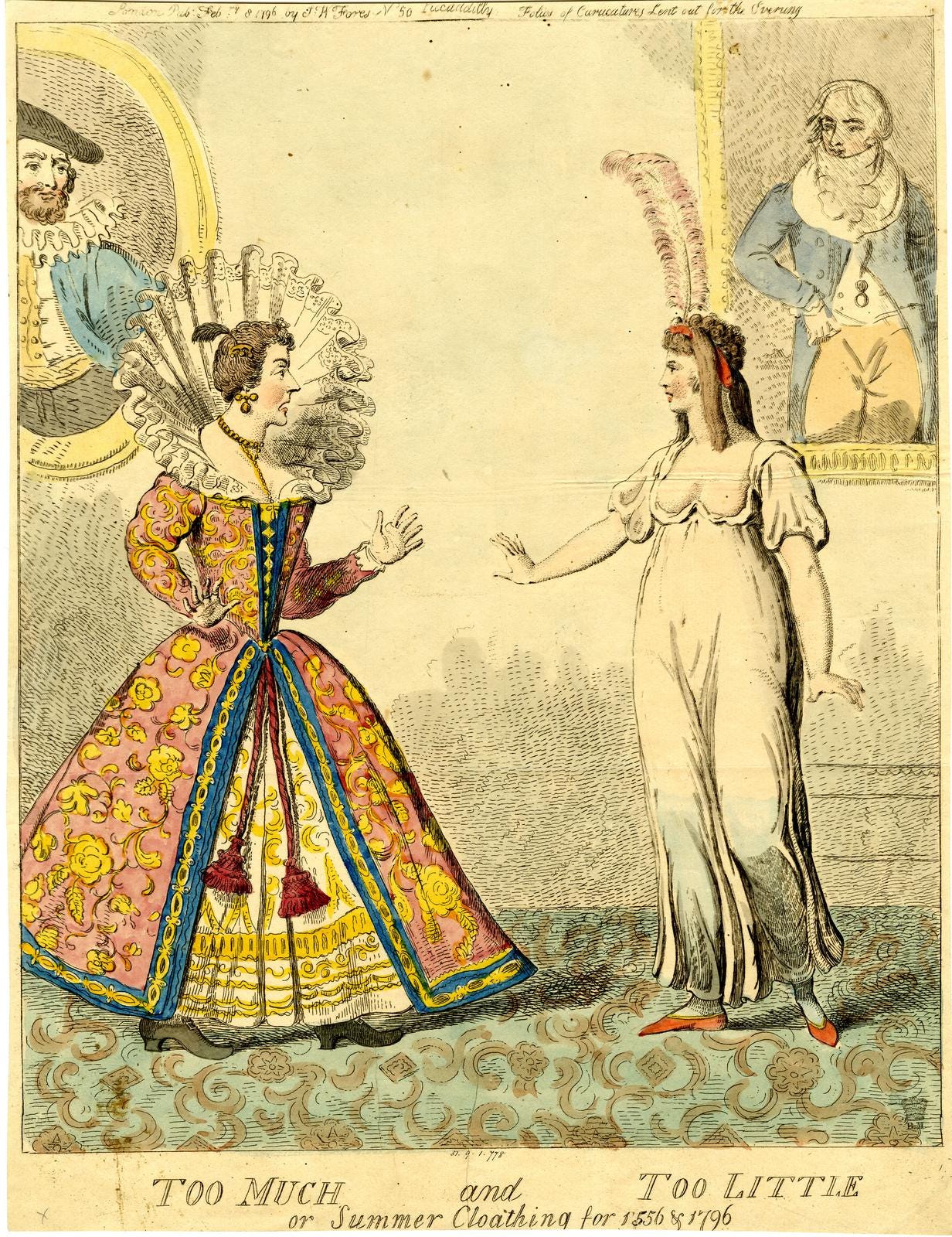
One of the leading figures of French neoclassicism was Thérésa Tallien who, in 1794, had narrowly avoided the guillotine. Imprisoned in La Force (one of France’s most vicious prisons), Tallien stood accused of procuring passports for her aristocratic friends and was personally targeted by Robespierre. With no writing materials to hand, she pleaded for release in letters written in her own blood.
After her release, she became a leading figure of French fashionable and social life. For Thérésa, simple neoclassical dresses were a way of honouring her time in captivity, situating herself as a politically active figure by dressing in simple gowns that resembled the chemise she had worn in prison. Her nudity was provocative because it reminded men that women had the capability to threaten regimes and influence real political proceedings.
There is a popular story about Tallien that illustrates the French obsession with light and transparent clothes. It is alleged that during a party at her home, she bet a man that her entire outfit would not weigh more than two six-franc pieces. To prove her point, she stripped down in front of her guests and proved herself correct.
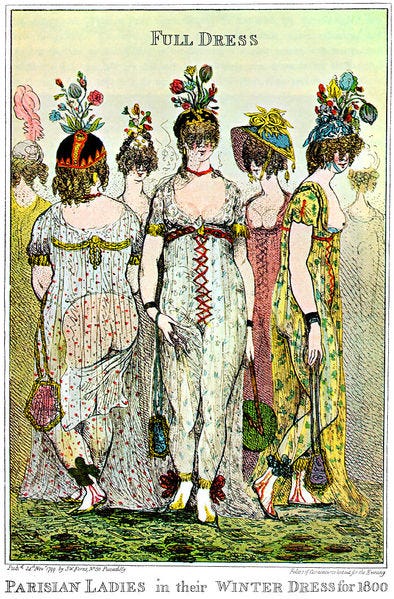
Transparent clothes serve a different function to opaque ones. Rather than transforming the flesh, it melds with it. Rauser writes; ‘The transparency of neoclassical muslin drew attention to the skin of the body not as a surface to be decorated but as the fine and perhaps permeable boundary between the self and the world’. To be naked in public is to be fully present in it, and to demand that others acknowledge your presence.
But when skin becomes the outfit, the problem arises that certain flesh is not always considered so acceptable – even in the already unacceptable state of nakedness.
A subculture of fashion at this time was dress a la sauvage, which took its liberated approach not from the political landscape of France, but from its colonial project instead. Characterised by extreme nudity, these gowns were made of flesh-coloured knitted silk and hitched up around the hips.
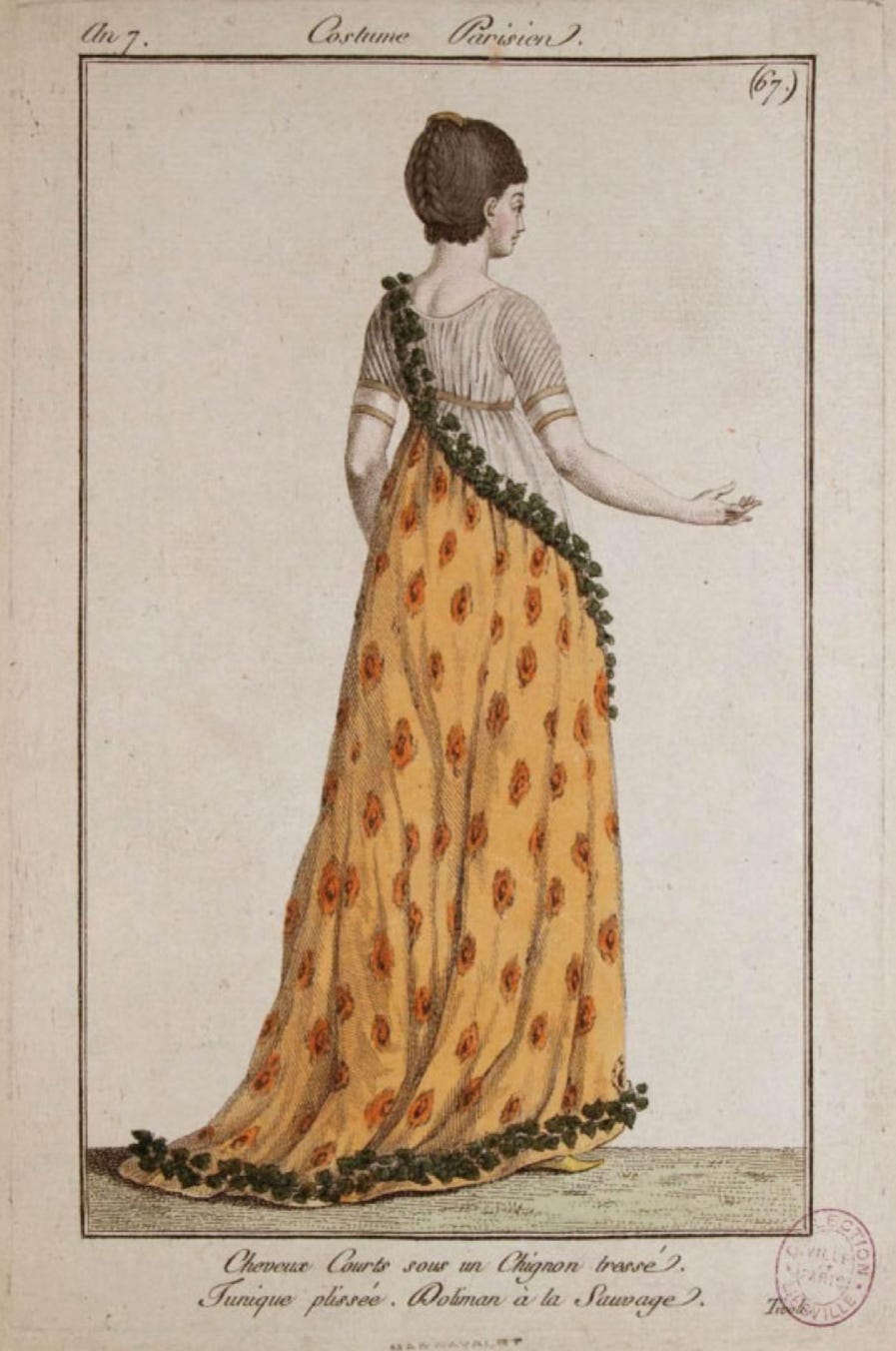
The inspiration for this style was the native women of French Polynesia, who were depicted in 18th century prints as topless and wearing gathered skirts. The women of Paris delighted in the contrast of the exotic and the familiar, the ‘primitive’ and the developed.
‘To be dressed a la Sauvage was to have all that part of the frame which is not left uncovered clad in a light drapery of flesh colour. The bodice, under which no linen was worn, was made of knitted silk, clinging exactly to the shape, which it perfectly displayed; the petticoat was on one side twisted up by a light festoon: and the feet, which were either bare, or covered with a silk stocking of flesh colour, so woven as to draw upon the toes like a glove upon the fingers, were decorated with diamonds’
Helen Maria Williams, April 11, 1798
But what happened when a woman of colour donned these sheer dresses? Fortunée Hamelin, a Creole from the West Indies, was one of the women most closely associated with dress a la sauvage, and discovered for herself the consequences of the unobstructed presence of non-white skin in public. As recounted in a Paris newspaper, the fashionable Madame Hamelin was disembarking from a carriage when a mob of angry passersby swarmed upon her, tugging at her dress and hurling insults. ‘The crowd would not let her go’, explained the article, ‘it was necessary to invoke the force public’. Like Tallien, Hamelin’s nudity demanded attention, but the skin of a mixed race woman was infinitely more offensive to Parisian sensibilities than a politically active woman.
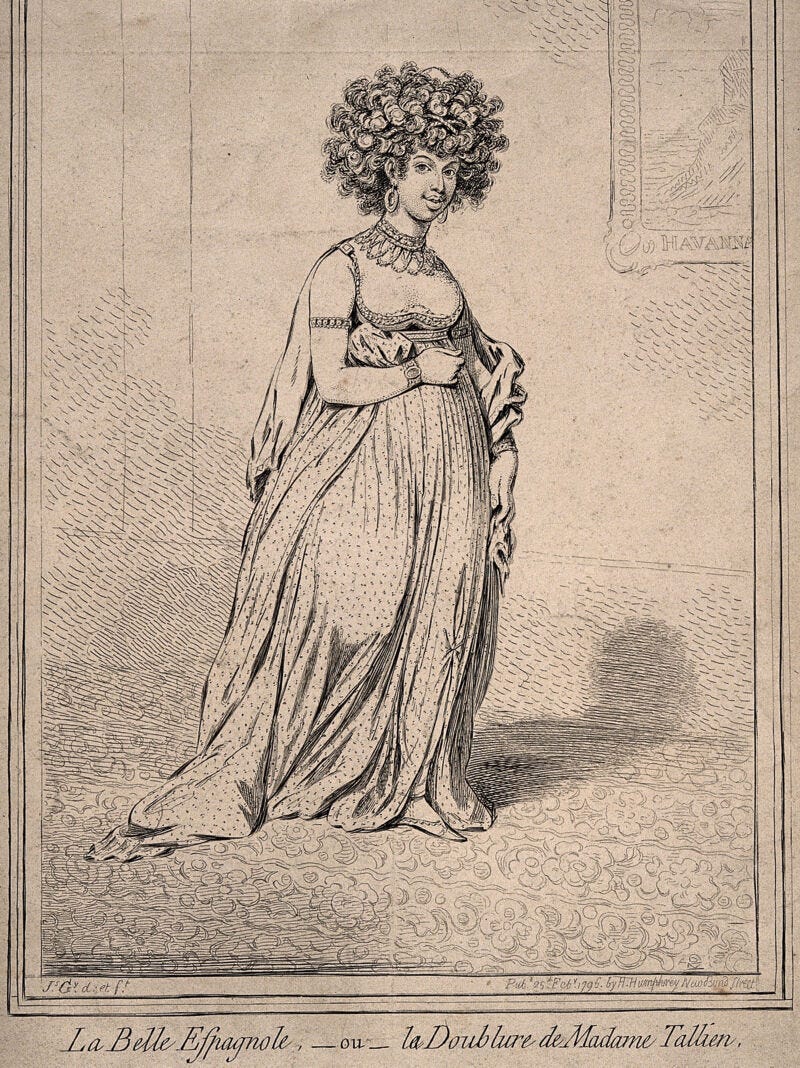
And so, from this age of undress, we arrive in 2025 with the Cannes Film Festival laying a strict ban on naked dresses. The reason being decency, and respect for the art that the festival honours. Sheer dresses demand too much attention, distracting from the films and documentary on show behind the doors of the palais. But attention has always been the point. In both neoclassical France and modern-day Cannes, nudity has been used not simply to titillate but to provoke, to disrupt, and to assert presence. The transparent gown has long been a means of making the wearer visible on her own terms, whether to challenge political oppression, colonial fantasy, or the red carpet’s unspoken codes.
Cannes’ new rules may be dressed up in the language of decency, but they betray a deeper discomfort with visibility. Our fear of the wrong kind of woman, wearing the wrong kind of dress, being seen too clearly. To ban the naked dress is not just to police fashion, but to sever the festival from the rebellious spirit that once defined it, and from a long French tradition where transparency was never about hiding, but about revealing exactly who holds power — and who doesn’t.
This was very interesting. I love how you started with the Festival de Cannes' ban then lead to history of fashion and finally to point on the liberty of women !